
Turn a warehouse roof into an energy asset
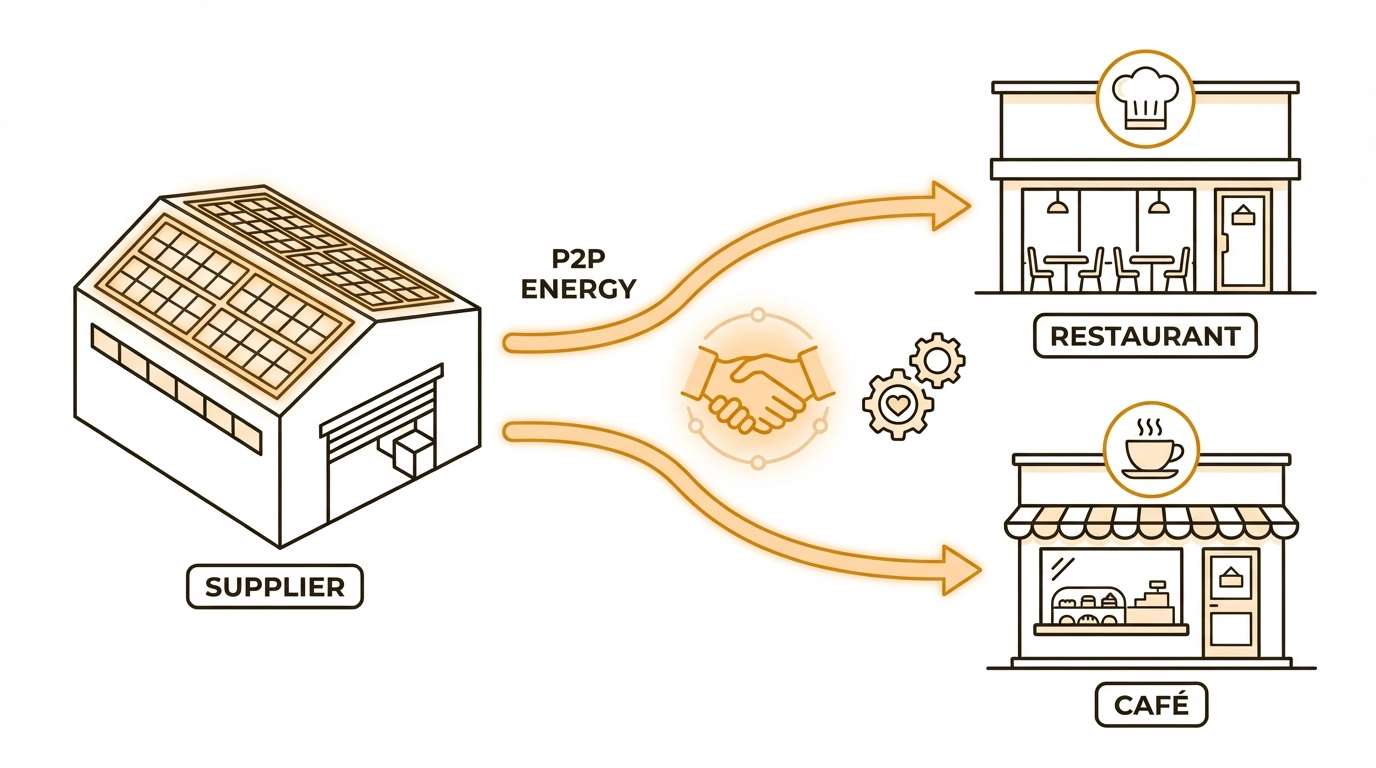
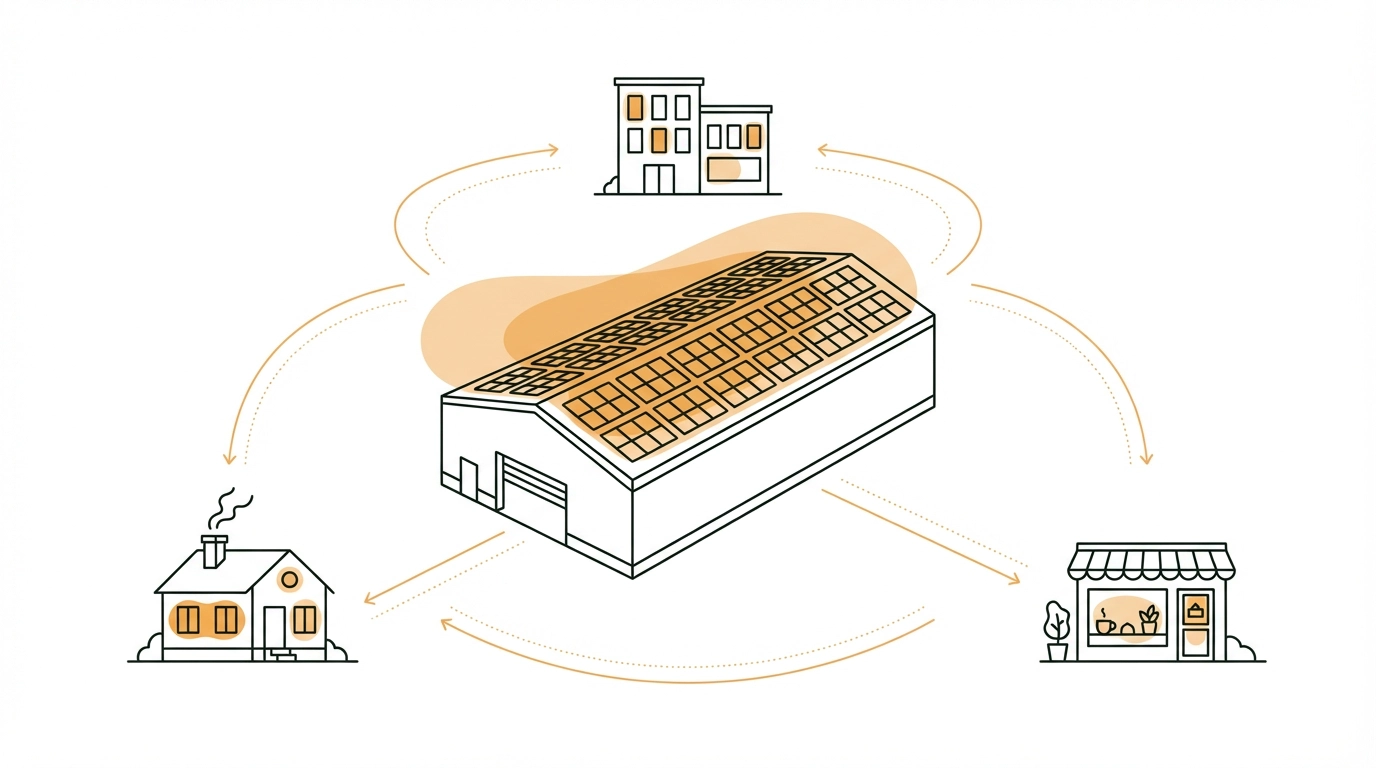
Many warehouses have huge roof space and relatively low daytime consumption — meaning a solar-only system can export most of its value away. Jousto helps you design a smarter outcome: use that roof to support other sites you own, or create customer/supplier energy partnerships through peer-to-peer energy.

Watch the warehouse explainer
Why warehouse roofs are underused — and how solar, storage and peer-to-peer energy can turn them into a strategic asset.
Start simple: a smart meter + Time-of-Use plan often unlocks the easiest wins. If you want a practical first retailer step, we recommend Energy Locals.
Big roof, small load = wasted value
Warehouses are often the perfect place to install solar — but not always the perfect place to use it. If the site has low daytime demand, most production becomes export at low value — while other sites nearby have no roof space at all.

The smarter question
Instead of “How much solar can we fit?”, ask: Where can this solar value do the most work?
- Your own offices, workshops or home.
- Customers and suppliers (strategic energy partnerships).
- Storage placed where it matters, not necessarily where the panels are.
Use your warehouse roof across your own sites
Many warehouse owners also have an office, other properties, or a home with limited roof space. Peer-to-peer energy can help you generate solar where the roof is best — and route the value where the usage is.

Where this works best
- Warehouse owner also runs an office site.
- Owner has multiple properties with different load patterns.
- The “best roof” isn’t the “highest usage” site.
Customer & supplier energy partnerships
If you supply restaurants or cafés, energy can become a relationship tool. You can help a customer access better energy outcomes — and build stickiness in the relationship — without turning it into a “profit scheme”.
Why it works
- Helps customers reduce exposure to high retail prices.
- Creates genuine goodwill and loyalty.
- Turns your roof into a strategic asset, not just an install.
Trading models vary by platform and rules. We keep it simple, transparent, and values-led.
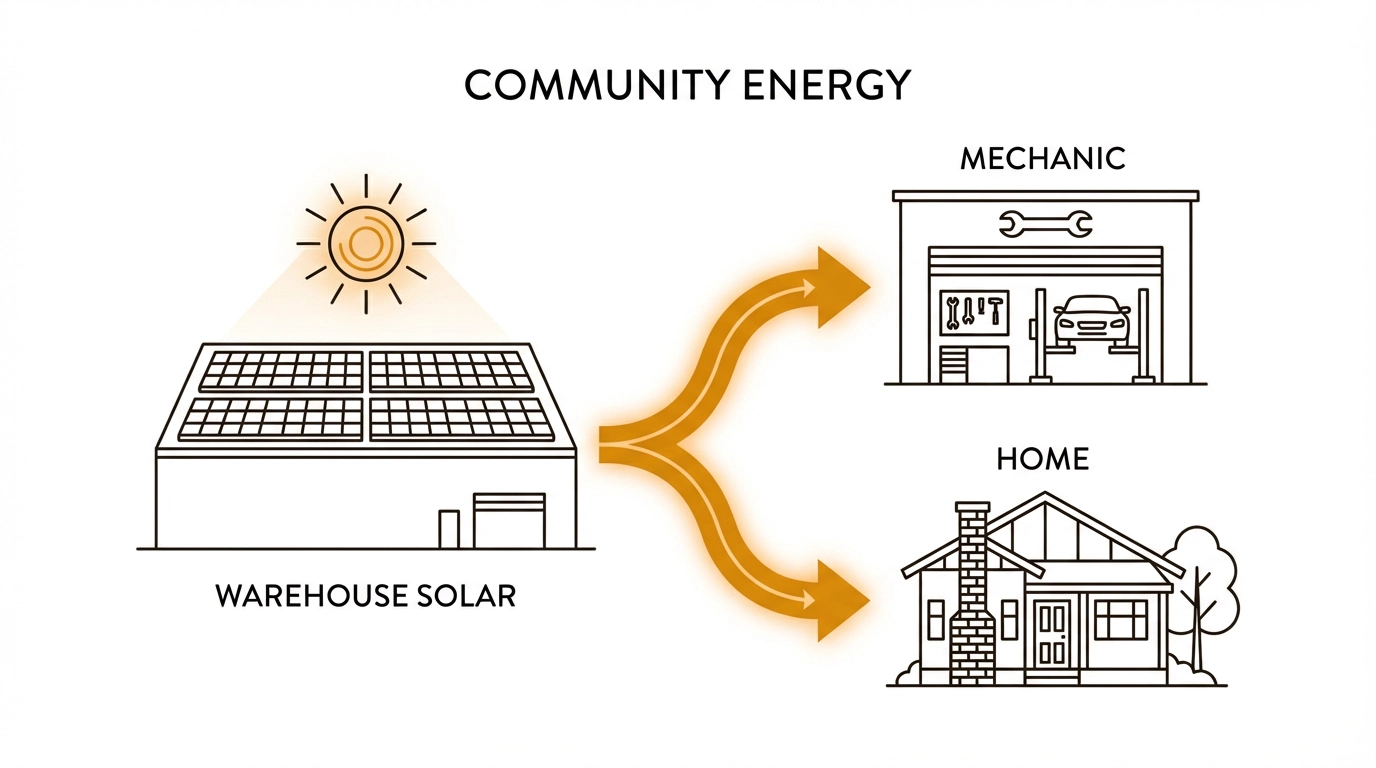
Warehouse → mechanic → home
The same pattern can work in other trade networks — for example, a warehouse supporting a mechanic workshop, and the mechanic routing energy value to their home.
The key insight
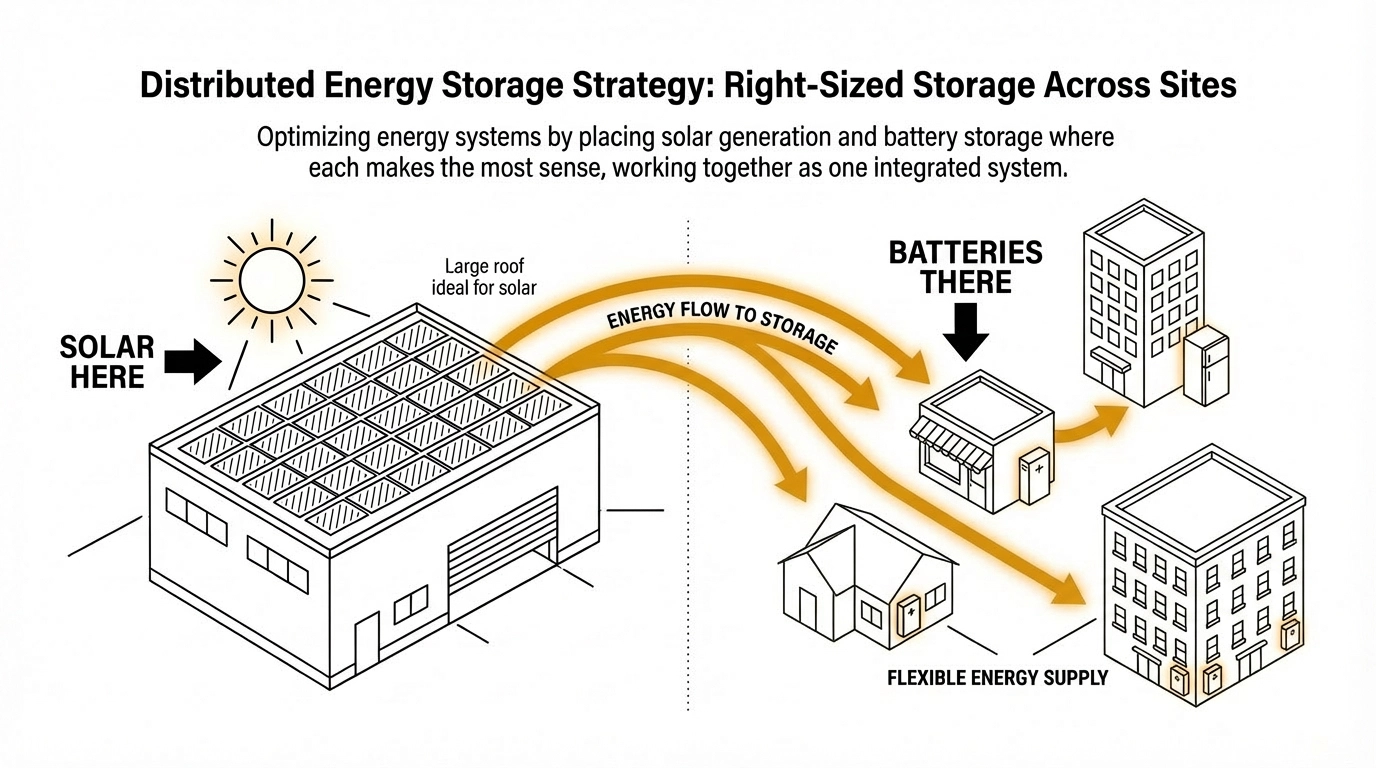
Not every site needs solar. Not every site needs a battery. The goal is to design the system across the network — and right-size each part.
Right-sized storage across sites
Sometimes the best outcome is solar on the warehouse and batteries somewhere else. Storage should go where it creates the most benefit: peak shaving, time shifting, or resilience — depending on the site.
When storage makes sense
- You have night-time or peak-period consumption to offset.
- You want resilience for critical circuits.
- You’re building a multi-site strategy, not a single-site install.
Monitoring, uptime & operational visibility
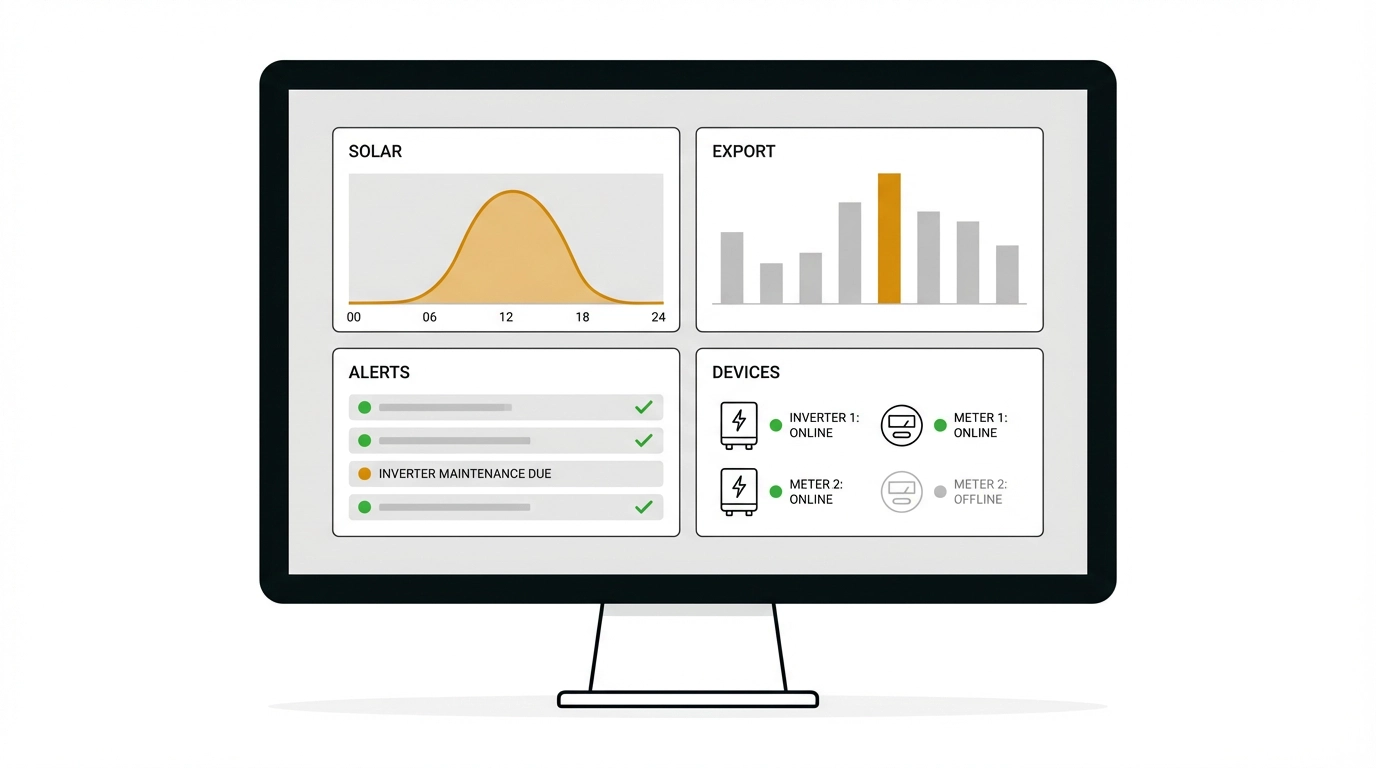
Even if peer-to-peer energy is the main play, warehouses still benefit from Jousto EMS fundamentals: monitoring, alerts, device health, and operational confidence.
What we track
- Grid import and solar export trends.
- System health and device offline alerts.
- Abnormal readings and performance flags.
- Optional temperature/safety sensors where needed.
Capability depends on your meter, controllable loads and installed hardware.
Peer-to-peer energy (Jousto values-led)
Peer-to-peer energy helps move value between people and places — keeping benefits inside your own network instead of handing everything to large corporations.

How we keep it sane
- Simple setup and transparent rules.
- No profit hype — just fair outcomes.
- Start with the basics, then upgrade when proven.
From wasted roof to strategic advantage
Done properly, a warehouse roof can become a long-term asset: supporting your own network, strengthening customer relationships, and delivering predictable energy outcomes.
What we design for
- Roof capacity, export limits, and practical compliance.
- Real load profiles across each site.
- Storage placement and staged upgrades.
- Monitoring and long-term operational confidence.
Book a free 30-minute energy design session
We’ll map your roof, meter setup, export constraints, and your best “value destinations” — your own sites or customer networks — then recommend the right solar + storage + Jousto EMS pathway.
What to bring
- Warehouse address and roof size (approx is fine).
- Recent electricity bill or interval data (if available).
- Any export limits you know about.
- Other sites you want to support (office, home, workshop).
- Customer/supplier ideas (restaurant/café/mechanic networks).
Want to see what your warehouse roof could support?
We’ll design a practical plan: start with monitoring + metering basics, then build a multi-site solar, storage and peer-to-peer strategy.
COMPANY
PRODUCTS
SERVICES
JOUSTO EMS
BATTERIES


© Copyright 2026.Honen Lead Generation.
All Rights Reserved.
Phone: 0489 261 333
185 Morphett St, Adelaide, SA, 5000